Salernitana Ultras Protest: A Team Lacking Fight Amidst Deep Crisis
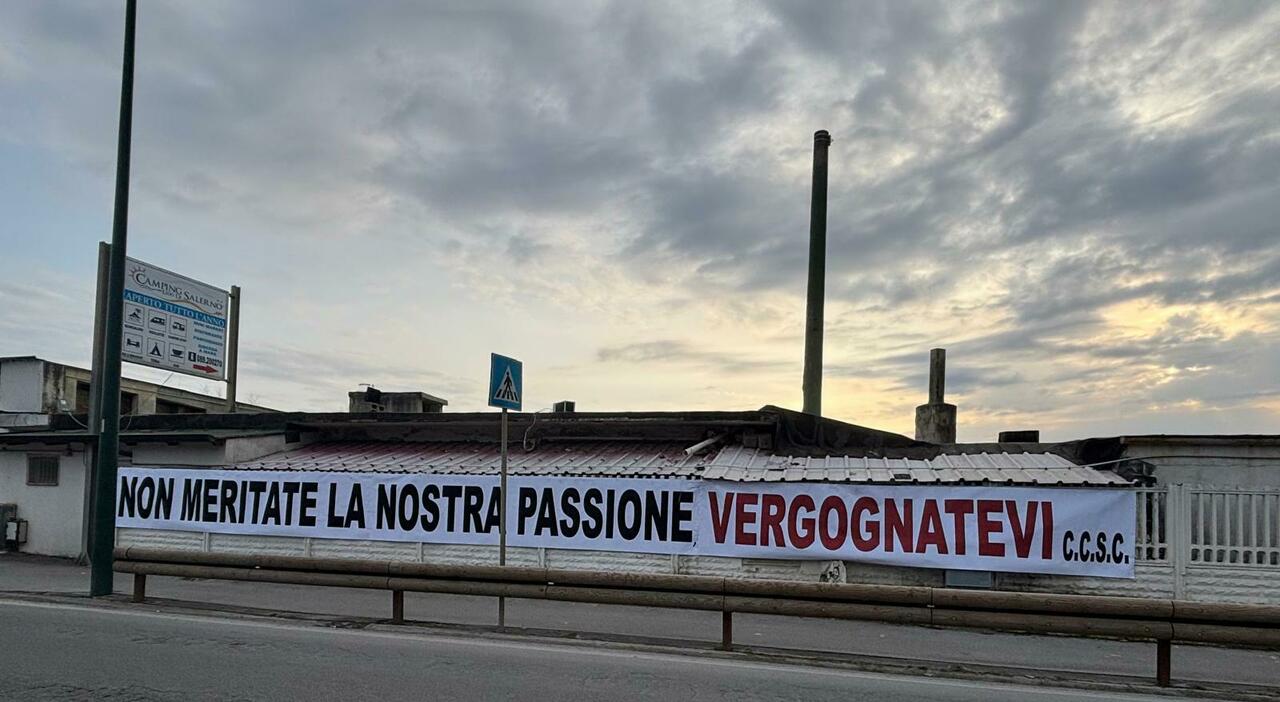
The air around the Centro Sportivo Mary Rosy, home to U.S. Salernitana 1919's training grounds, crackled with an intensity far removed from a typical afternoon practice session. Fifty passionate ultras of Salernitana converged at the facility, not to cheer, but to voice their profound anger and disappointment. Their target: a team perceived to be devoid of spirit, fight, and the essential *mordente* (bite) expected from players wearing the iconic Granata colors. This dramatic protest highlights the escalating
crisi Salernitana, a multifaceted predicament that has gripped the club and its dedicated fanbase.
The immediate catalyst for this outpouring of frustration was the recent derby defeat to Caserta. However, it wasn't merely the loss itself that incensed the supporters, but the utterly listless manner in which it unfolded. "Squadra spenta, senza mordente" – a team switched off, without any drive – became the damning verdict. These weren't just disgruntled murmurs; they were chants of rage and disillusionment, directed squarely at the players who were preparing for their upcoming clash against Latina at the Stadio Arechi. The message was unequivocal: "Tirate fuori gli attributi!" ("Pull out your guts!"), and "Meritiamo di più!" ("We deserve more!") bellowed the ultras, demanding an immediate and undeniable response from a squad that seemed to have forgotten the very essence of competitive sport. This isn't just about results; it's about the soul of the club, reflecting a profound
crisi Salernitana that runs deeper than the league table.
The Boiling Point: Ultras Demand Passion and Performance
The demonstration at Mary Rosy was a stark reminder of the unique bond between Italian football clubs and their most ardent supporters. For Salernitana, a club steeped in history and known for its fierce loyalty, the sight of ultras staging a protest before a crucial match is a serious indicator of deep-seated issues. It signifies that the team's perceived lack of commitment has crossed a critical line. The chants were not just a plea for victory, but a demand for the fundamental attributes of a professional athlete: courage, determination, and an unwavering will to fight for the shirt.
This isn't the first time the ultras have made their presence felt during this turbulent period. A previous, more symbolic protest occurred on Carnevale (Carnival) day, where wigs were affixed to paper sheets at the training ground entrance. While perhaps less confrontational, that earlier action also signaled brewing discontent during a critical phase under then-coach Raffaele, prior to the club's decision to bring in Cosmi. These repeated acts underscore that the current
crisi Salernitana is not an overnight phenomenon but the culmination of accumulating frustrations, where a series of disappointing performances and what is perceived as a lack of effort have eroded faith in the team's direction and commitment. The fans' expectations are high, and they believe the current squad is failing to meet the minimum standard of effort, prompting these vocal interventions to shake the team from its lethargy.
Dissecting the On-Field Meltdown: Tactics, Personnel, and Mentality
Beyond the passionate pleas of the ultras, a deeper dive into Salernitana's on-field performances reveals a team that has lost its way, struggling with cohesion, compactness, and clarity. The recent match against Cerignola served as a microcosm of the club's current predicament. The team found itself constantly chasing the game and its opponents, ultimately losing not just the result but also its tactical "filo" – the thread of its play.
What emerged instead was a squad that became "litigiosa" (argumentative) and a "campionessa di mimica" (champion of mimicry or excessive gesturing). From lost tackles to misguided crosses, the frustrations were evident, even radiating from the coaching dugout where Giuseppe Raffaele’s body language increasingly communicated bewilderment: "Com'è possibile? Come si fa?" (How is this possible? How can this be done?). This visible decline in composure suggests a significant mental block within the team, exacerbating the
crisi Salernitana.
Adding to the instability has been a seemingly erratic management of personnel. The case of Golemic, who was named a starter after a long period of inactivity only to be subsequently dropped due to performance issues, highlights a lack of consistent selection strategy. Similarly, Tascone was preferred over Carriero, only to remain in the changing room later, while Quirini is reportedly "impaired" or "scared." Ferrari, after being excluded for several matches, returned to the lineup, moving with an "evidente lentezza." Such inconsistent and reactive player management can shatter confidence, create uncertainty within the squad, and prevent any stable tactical identity from forming. When players are unsure of their roles or their standing, it inevitably impacts their performance and further contributes to the overall sense of disarray that defines the
crisi Salernitana. A team thrives on stability and clear direction, elements that appear conspicuously absent from Salernitana's current internal dynamics.
The Managerial Merry-Go-Round: A Search for Stability
In times of profound crisis, the spotlight inevitably turns to the manager. Giuseppe Raffaele's position has become increasingly precarious, described as "sempre più in bilico" (increasingly on the brink). The club hierarchy is acutely aware of this "gestione particolare" (peculiar management style) that has seemingly failed to arrest the team's decline. An "inevitable overturn" ("ribaltone pare inevitabile") seems to loom large, yet the timing remains complicated by a congested fixture list, including matches against Casarano and the crucial derby with Cavese.
The search for a solution has reportedly led the club to consider various profiles. Guglielmo Stendardo, the unbeaten coach of the Primavera (youth) squad, has emerged as a potential internal interim solution, akin to Benevento's approach with Floro Flores. This option, though offering an immediate fix, carries its own risks and rewards. An internal appointment could leverage an existing understanding of the club's culture and players but might lack the experience required to navigate the choppy waters of senior professional football. For more on this coaching dilemma, read our detailed analysis here:
Salernitana Coaching Crisis: Stendardo Eyed as Interim Solution.
Beyond Stendardo, a list of more seasoned coaches, including Pazienza, Pecchia, Faggiano, and D'Aversa, are reportedly on the club's radar. D'Aversa, in particular, with a strong link to club director Faggiano, represents a more experienced profile for Serie B, but would likely only accept with a long-term commitment. The constant speculation surrounding the coaching position only serves to compound the existing
crisi Salernitana, creating an environment of uncertainty that is hardly conducive to rebuilding morale or fostering a cohesive team spirit. A decision needs to be made swiftly, and with a clear vision, to provide the much-needed stability the club desperately craves.
The Road Ahead: Battling for Survival and Redemption
With fan patience wearing thin and internal disarray evident, Salernitana finds itself in a desperate battle for survival. The recent losses, particularly away at La Spezia, coupled with unexpected victories from direct rivals like Reggiana, Brescia, and Mantova, have plunged the Granata back into the perilous relegation/playout zone. The math is stark: to even aspire to the playouts, the team needs at least five points from its next three games, ideally six, to secure a fighting chance at survival.
The upcoming fixture against Mantova at the Arechi offers a critical opportunity. Mantova, while conceding many goals, is also described as "sbarazzino e segna" (carefree and scores). Crucially, they are not yet safe at 40 points, meaning they won't arrive in a "balneare" (holiday) mood. This match, in a strange twist of fate, might be the "cura migliore" (best cure) for Salernitana, forcing them to focus solely on the task at hand without overthinking. The primary advantage Salernitana must leverage is motivation. They need to "rugare" (roar) with a hunger that Mantova, despite their own ambitions, may not match. This fixture, and the immediate games that follow, are true "spareggio" (play-offs) for the Granata.
For a deeper look into the urgent points needed, explore:
Salernitana on the Brink: Urgent Points Needed to Avoid Playouts.
To emerge from this profound
crisi Salernitana, the team must undertake several critical steps:
*
Reconnect with the basics: Simplify tactics, focus on defensive solidity, and build from a foundation of hard work.
*
Show undeniable fight: Every tackle, every sprint, every challenge must be executed with conviction. The fans demand passion for the shirt.
*
Mental Fortitude: The psychological aspect is paramount. The team needs to find resilience, block out external pressures during games, and play with self-belief.
*
Leverage Fan Support: When the ultras are positively engaged, the Arechi can become a fortress. The team must earn that positive engagement through their effort.
Conclusion
The
crisi Salernitana is a complex tapestry woven from fan discontent, on-field struggles, and managerial instability. The ultras' protest at Mary Rosy served as a powerful, visceral reminder that the passionate fanbase expects not just results, but a tangible display of commitment and fight from their team. To navigate these treacherous waters, Salernitana must look beyond mere tactical adjustments. It requires a fundamental shift in attitude, a re-ignition of spirit, and a renewed connection with the very heart of the club – its supporters. The road to redemption is arduous, but it is one that Salernitana must embark upon immediately, with every ounce of courage and determination, to pull itself back from the brink and restore pride to the Granata shirt. The destiny of the club, for better or worse, now lies squarely in the hands of those on the pitch.